
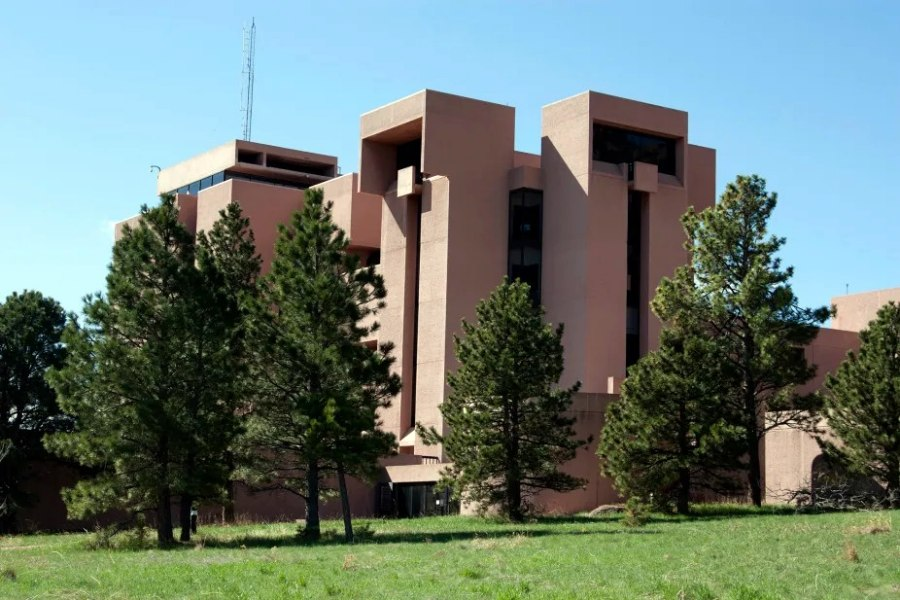
WASHINGTON — The White House announced plans this week to dismantle the National Center for Atmospheric Research. NCAR is a leading U.S. climate and weather research institution based in Boulder, Colorado. The announcement drew sharp criticism from scientists, local officials, and national advocacy groups.
The Office of Management and Budget announced the move in a statement on social media. It stated that the National Science Foundation will break up NCAR, which was established in 1960 and funded through the NSF as a federally supported research and education center. The administration described the center as a major source of “federal climate alarmism.” It said that “vital activities,” such as weather research, could be moved to other entities or locations. It provided little detail on how operations would continue.
NCAR conducts research on the atmosphere, climate, and earth systems. This research underpins weather modeling and climate projections. It also supports disaster preparedness tools used by federal, state, and local agencies. Its facilities include supercomputing resources, research aircraft, and a collaborative network of scientists drawn from universities nationwide.
Reaction from Scientists and Officials
Scientists and research administrators raised alarms over the potential breakup of NCAR. They warned it could disrupt long-established collaborations. This change might also weaken the nation’s ability to track and forecast weather and climate hazards. Antonio Busalacchi is the president of the University Corporation for Atmospheric Research (UCAR), which manages NCAR. He said dismantling the center would set back U.S. capabilities to predict and respond to severe weather. It would also impact responses to other natural disasters.
Colorado Gov. Jared Polis said officials in the state had not been informed in advance. He warned that the proposal could jeopardize public safety. He noted that NCAR’s work extends beyond climate research. It includes wildfire, flood, and storm data that help protect communities.
Broader Context of Federal Climate Research Cuts
The NCAR proposal comes amid a broader series of cuts and restructuring affecting federal climate and environmental research. Earlier in 2025, hundreds of employees were laid off at the National Oceanic and Atmospheric Administration. This was part of wider budget reductions. Regional climate centers nationwide faced closure. These closures were due to lapses in funding tied to federal spending decisions.
Critics have characterized such moves as part of a pattern that could weaken U.S. scientific capacity. This could diminish the nation’s contribution to global climate research. Meanwhile, supporters within the administration have framed them as efforts to reduce spending. They aim to refocus priorities.
What You Can Do To Oppose the Move
While the process for executing a decision like the dismantling of NCAR involves multiple federal agencies and budgetary steps that may require congressional action, there are several established avenues for public engagement and opposition:
Contact Your Elected Representatives
Citizens can reach out to members of Congress — especially those on science, appropriations, and budget committees — to express concern about the potential impacts of breaking up NCAR. Lawmakers control federal funding and can influence or block budget proposals.
Engage with State and Local Leaders
State officials and local representatives can pass resolutions, join legal challenges, and advocate directly with federal agencies. Governors, state legislators and municipal governments have previously weighed in on federal research funding decisions affecting their regions.
Support Scientific and Advocacy Organizations
Groups like the Union of Concerned Scientists and professional scientific societies often organize campaigns, write policy analyses, mobilize public comment periods, and file amicus briefs in legal challenges. Supporting these organizations can amplify individual voices.
Public Comment and Policy Review Participation
Federal agencies are generally required to solicit public comment before making major regulatory or organizational changes. Stakeholders can file comments during these periods to ensure their views are recorded and considered.
Raise Awareness Through Media and Public Forums
Letters to the editor, opinion pieces, public forums, and social media outreach help inform broader communities about the stakes involved in scientific infrastructure decisions. Broad public engagement can influence political priorities.
This account is based on reporting and statements circulating in major news outlets and science advocacy groups as of Dec. 17, 2025.